Our Group Keyboard lessons are designed for the 4-6 year old, this is the best time to start them in lessons. The groups are a great first impressions, having 5 kids playing rhythms together, learning the notes and playing songs gives great social confirmation!
Learning the basic building blocks at this age is really the only plan that makes any kind of sense. Their brains are primed for learning, by playing music at this age gives them a huge advantage in the years to come!
This is how the groups are structured.
5 minutes – Rhythms
5 minutes – Reading/Writing notes out of the notebook
A: Tuition is $120/month for the weekly 30-minute group class.
Q: Do we need materials for class?
A: No, we give you a Music Bucket that includes
Drum Bucket
Drum Sticks
Keyboard
Music Notebook
GIFT CARDS
Q: When are classes scheduled?
A: We like to schedule the classes between 330-6 Monday-Friday, and 10-2 on the weekends. Email or call david@hallmusicproductions.com 817.899.7499 for scheduling.
Q: How do we sign up?
A: Click register to get your student in our system and we will reach out about scheduling!
The general consensus is that in-home lessons offer a mediocre musical experience, with instructors who’d rather spend their time sitting in traffic than teaching serious students, and parents who don’t value music education enough to visit the music studio.
The exception of course is the Aristocratic music lesson for those of means and fame, who prefer the convenience and security of home lessons of the highest quality for their children and themselves. This is suitable for celebrities, athletes, politicians, CEO’s and those who simply insist on the best in life at home.
The Mozart Standard: A Legacy of Private Instruction
To structure this we will use Wolfgang Amadeus Mozart as an example.
To support himself and focus on his 800+ compositions Mozart took on several pupils while living in Venice, Italy. You might have heard the aphorism, ‘Those who can, do, those who can’t, teach’. Well to that I simply ask, ‘Have you heard of Mozart, Bach or Beethoven?’.
Mozart would see his students 3 times a week, around noon which allowed him time to compose in the morning and then late into the evening. His writings and accounts from his students indicate that he enjoyed teaching, often composing pieces for his students to work on.
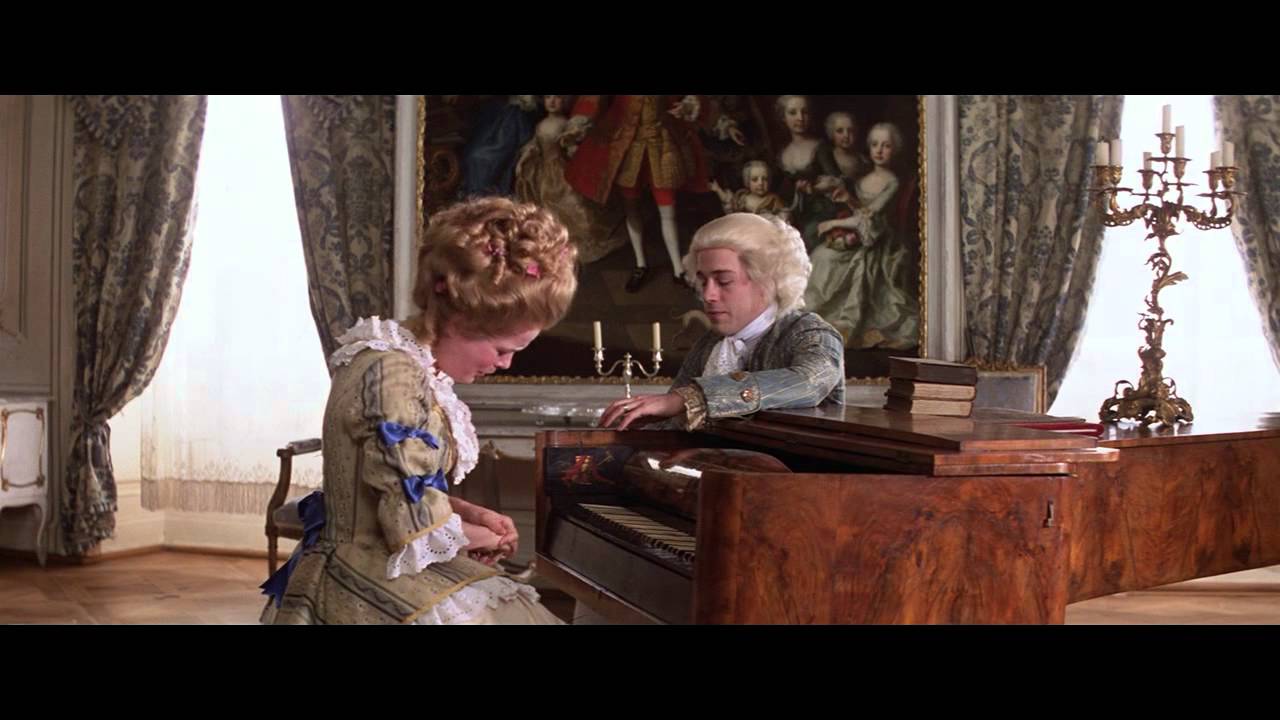
From Amadeus
Mozart’s teaching was often tailored to the pupil’s needs. He taught keyboard composition, and sometimes vocal coaching. Lessons were usually one-on-one, held at the pupil’s home or Mozart’s residence, and were a significant part of his income in Vienna, where he charged around 6 ducats per month for regular lessons.
Beyond Talent: The Power of Perfect Pitch and Modern Pedagogy
Mozart possessed Perfect Pitch, the coveted ability to instantly recognize any musical note without a reference. For generations, this was considered an innate gift. However, advancements in understanding and teaching now reveal that Perfect Pitch can be taught to most individuals, opening up a world of musical possibility previously unimaginable.
Combine this breakthrough with the unprecedented access to information and personalized learning that modern technology provides, and you have the most powerful musical education experience in history!
The Aristocratic Program: Unparalleled Excellence at Your Doorstep
For the discerning family, we’ve designed an exclusive in-home music program that mirrors the dedication and intensity of historical masters like Mozart, yet is amplified by today’s technological advantages. This is not merely a lesson; it’s an immersive musical journey crafted for those who insist on the highest standards for their children and themselves.
The Aristocratic Program offers:
Monday – Wednesday: 3x 1-hour in-person lessons. These intensive, one-on-one sessions provide deep dives into theory, technique, and personalized repertoire development. Our instructors are not only exceptional musicians but also dedicated educators committed to nurturing serious talent.
Thursday – Sunday: 4x 15-minute FaceTime lessons. Reinforce learning and maintain consistent progress with frequent, focused virtual check-ins, ensuring continuous engagement and real-time feedback.
This rigorous schedule, coupled with our innovative teaching methodologies, is designed to fast-track musical proficiency and foster a profound understanding of music.
Imagine what your child can achieve in just three years:
Effortless Playback: Play virtually anything they hear.
Fluid Sight-Reading: Read music with ease and confidence.
Mastery of Standard Repertoire: A comprehensive introduction to classical and contemporary masterpieces.
Personalized Repertoire: Develop a collection of music they genuinely love to play.
Perfect Pitch Singing: Sing in perfect tune, a skill that enhances all musical endeavors.
Deep Harmonic Understanding: A comprehensive grasp of musical structure and theory.
Ensemble Readiness: Confidently and effectively participate in musical groups.
The Investment in Excellence
The value of this unparalleled musical education is reflected in its commitment to exceptional instruction and personalized attention. Drawing inspiration from Mozart’s own compensation, the tuition for the Aristocratic Program is based on an inflation-adjusted rate of 6 Venetian Ducats.
In today’s terms, this translates to $51,000 USD (or 0.432 BTC). This investment ensures access to the finest instructors, a meticulously designed curriculum, and a level of personalized attention that is truly without equal.
Don’t settle for mediocre. If you seek to unlock your child’s full musical potential and provide them with an education that reflects your commitment to excellence, the Aristocratic Program offers the ultimate in-home musical experience.
Are you ready to elevate your child’s musical journey?
Unlock Your Child’s Musical Superpower: How to Train Their Ears Like a Pro
As a parent, you want the best for your child—especially when it comes to unlocking their potential. Imagine your child listening to a song and instantly playing it on the piano or guitar, with ears sharper than most professional musicians! I helped my son achieve this by age 7, and you can do the same for your child. Here’s how.
Why Ear Training Matters for Kids
Ear training isn’t just for aspiring musicians—it’s a life skill that boosts creativity, focus, and confidence. Kids with trained ears can hear a melody and recreate it, making music fun and intuitive. Research shows kids aged 5–12 are in a critical learning window for musical skills (Journal of Music Education, 2023). After this, learning becomes harder. Start now, and your child could develop perfect pitch.
Ready to give your child a musical edge? Keep reading to learn the simple, low-stress method I used.
My Journey: From Skeptic to Ear-Training Believer
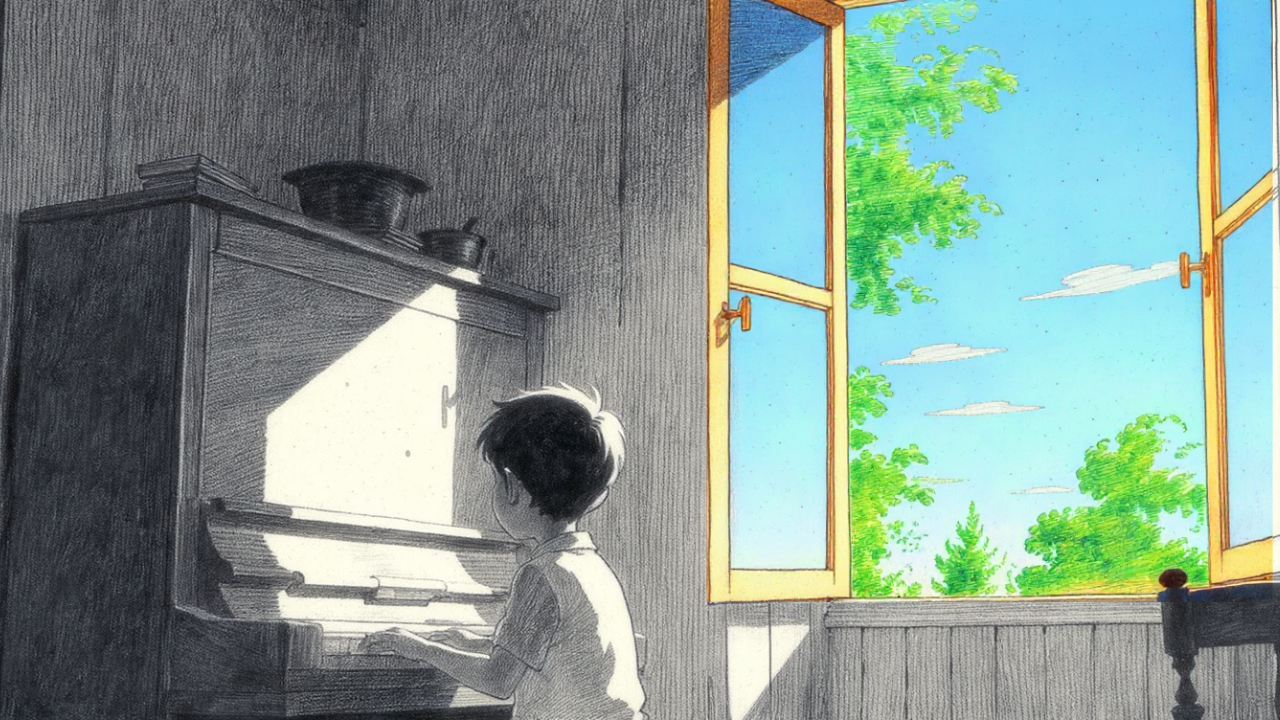
I didn’t start playing music until 2nd grade. My parents “forced” me into piano lessons (sound familiar?), and my dad tried to make me practice. I enjoyed some of the songs, quickly learned how to read(it’s not that complicated). I’d hear music in the car, on the bus and at church but the idea of listening to music and recreating it never came up until one summer in San Antonio.
My cousin Ryan mentioned a kid at his school who could hear a song and figure out how to play it. “Impossible!” I thought. My teachers never mentioned this was possible—sheet music was all we used! But that moment planted a seed.
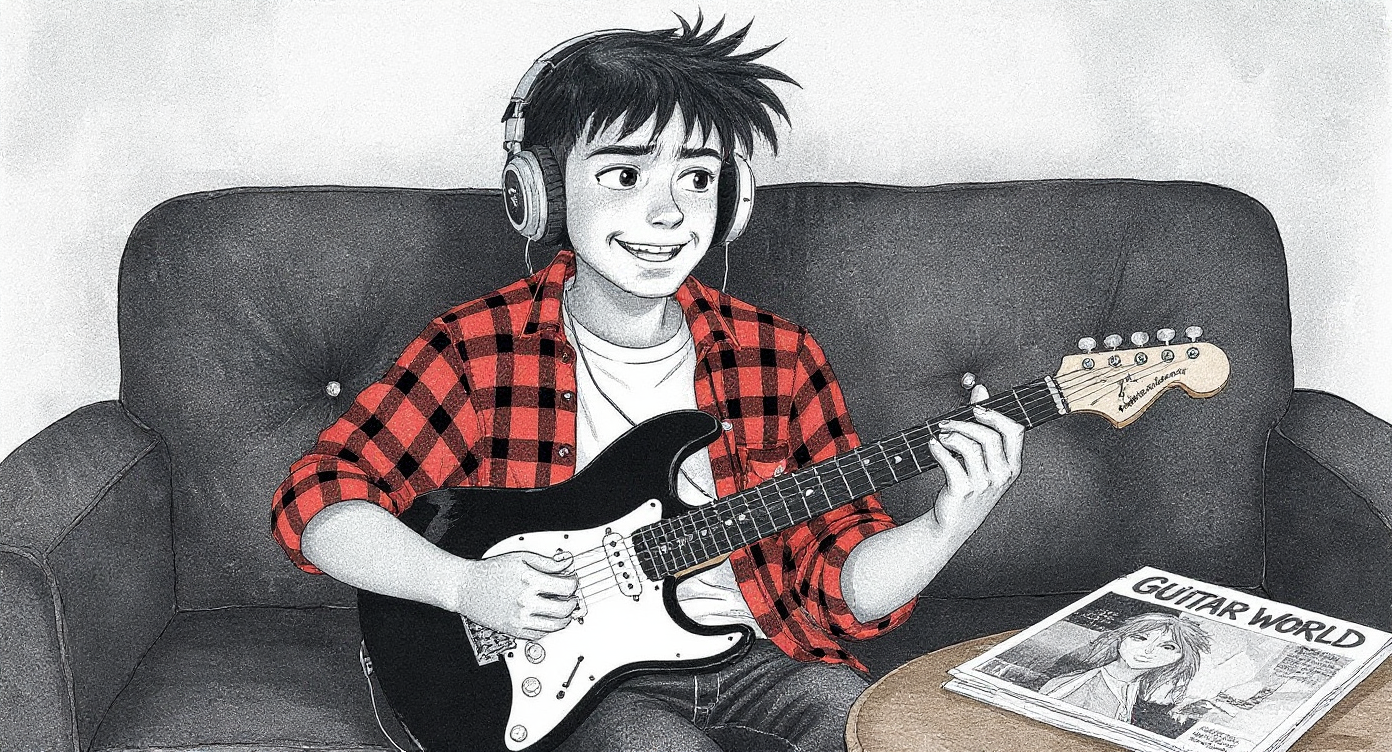
Fast forward to 8th grade. I picked up my dad’s guitar, armed with Guitar World magazines and radio tapes. I’d record songs, rewind, and figure them out note by note. It was slow, but I was hooked. Then, a teacher blew my mind. I asked to learn Margaritaville, and he wrote it out from memory.
I was dumbfounded, I asked him ‘How did you do that?’
He smugly replied, ‘Oh I have perfect pitch’.
I naively responded, ‘What is that?’
‘I can listen to something and figure out what it is.’, he quipped.
Irritated I clarified, ‘So you mean to tell me that you can just listen to something and figure it out? I don’t have to read it from music or tabs?’
‘Yes’ he responded.
I exclaimed, ‘Why didn’t you tell me that?!’
The funny thing about this memory is the ‘you’ in this instance I took to mean ‘ANYBODY’, but the teacher meant that he alone had this great power and I didn’t.
I couldn’t believe it! Why wouldn’t any of my teachers tell me something as simple as ‘LISTEN’ to the music and figure it out? The idea made so much sense.
So I went home and spent countless hours listening and figuring out music that I was interested in one note at a time. By 15, I was transcribing solos, but I realized something critical: I’d missed the prime learning window (ages 5–12). My ear was good, but it could’ve been great if I’d started earlier.
The Problem with Traditional Music Lessons
Most music lessons focus on reading sheet music or tabs, not listening. This is a huge gap. Kids naturally learn language by listening—music should be the same. Traditional lessons often miss the critical 5–12 age window when kids’ brains are wired to absorb musical patterns effortlessly (Child Development Studies, 2022).
I founded a music school in Southlake, TX after graduating from the University of North Texas with a Jazz Guitar degree. After 20 years of teaching music lessons in Southlake, I saw the same issue: students weren’t taught to listen. Even my own ear training, developed through trial and error, was “slow and fuzzy.” I wanted better for my kids and my students.
How I Trained My Son’s Ears—and How You Can Too
In 2020, during my son’s 1st-grade virtual schooling(thanks Covid), I decided to train his ears daily. I wasn’t sure how well it would work, the results I still can’t believe.
Within nine months, he went from recognizing four notes (C, D, E, F) to identifying every note in an octave, then on any instrument, and even complex chords. Now, he listens to Bach’s 371 Chorale Harmonies and names 3–4 note chords with ease. His ears are sharper than any musician I’ve met, and all it took was low-stress, consistent practice.
Here’s the secret: short, daily ear-training sessions during the 5–12 age window. Think of it like brushing teeth—5 minutes a day builds lifelong skills. Here’s how you can replicate this at home.
I helped develop Pitchcraft, an ear-training app based on my method. It’s simple: kids listen to notes or chords and identify them, like a game. My son used it daily, and I even improved my own ear 10x using it. Four teenage students developed perfect pitch, but younger kids progress faster.
(Visit Pitchcraft.me today and have your child play for 5 minutes daily. It’s fun, mobile-friendly, and effective!)
Step 2: Make It a Daily Habit
Consistency is key. Kids need short bursts of practice (5–10 minutes) daily, not an hour once a week. The brain learns better with spaced repetition (Learning & Memory Journal, 2024). Set a reminder on your phone for a quick session each morning.
(Schedule 5 minutes each morning for ear training. Use Pitchcraft or play notes on a piano and have your child name them.)
Step 3: Discover Music They Love
Kids learn best when they’re excited. Share songs you love, watch movies with great soundtracks, or ask family members for favorites. When they find music they connect with, they’ll want to recreate it.
(Create a family playlist in iTunes or Spotify, each time your child shows interest add it!)
Step 4: Work with an Instructor
An instructor can guide, correct, and motivate. Playing in person is critical for learning to play with other people, this is impossible to do online! I use a modern lesson plan that takes advantage of technology and closely mirrors what I did with my own son at home.
Monday–Tuesday: 15-minute FaceTime (Ear Training, Copy Cat, New Song Idea)
Friday–Sunday: At home (5 minutes on Pitchcraft, practice songs, discover music)
This plan requires only 3 days of at-home practice, with 5 minutes on the app and a reminder to “play your songs.” The rest of the time should be spent discovering music that they are excited about. The entire approach should strive to be stress free, kids learn better that way.
Action! Find a local music teacher or contact my school for virtual lessons. Ask about ear-training focus!
Why Start Now?
The 5–12 age window is critical. After that, ear training takes more effort (Cognitive Science Review, 2023). My son’s ears outpaced mine because we started him young. Your child can achieve the same with small, consistent steps.
Imagine your child playing their favorite song by ear, beaming with pride! That’s the magic of ear training. It’s not about forcing practice—it’s about making music intuitive and joyful.
Take the First Step Today
You don’t need musical skills to help your child succeed. Start with these simple actions:
We’ve been teaching drum lessons in Southlake, TX for 20 years!
Here are some FAQ about drum lessons
FAQ:
Do I need a drumset for drum lessons?
Not to start, but eventually yes. You will want to have the instrument you are learning at home to practice on! It is our opinion that everyone should own a drumset.
What do I need to bring to my first drum lesson?
Drumsticks & an 8.5″ X 11″ notebook.
Do I have to read music?
Yes. We will teach you how to read Rhythms on paper.
Lesson Subjects
Warmup Exercises
Rudiments
Stick Control
Syncopation
Snare Drum Reading
Drum Set Reading
Beats & Fills
Song Form
Learning Songs
Learning how to function in an Ensemble
Interested in trying a drum lesson in Southlake? We’re right in the center off of Byron Nelson & 1709!
give us a call or txt 817.703.3205 to setup a trial!
We’ve been teaching guitar lessons in Southlake, TX for 20 years. Here are the answers to some of our most frequently asked questions!
FAQ:
Do I need a guitar for guitar lessons?
Yes you do. For a young beginning student I’d suggest a Baby Taylor for an acoustic or a Fender starter pack for electric. Both are well made and will last until the student is a teenager.
Acoustic or electric?
Either. Just please purchase a good instrument. Having a cheap instrument that doesn’t stay in tune or just sounds bad can be very discouraging and frustrating to a beginner.
How long a guitar lesson should I take?
As long as you like. For the younger beginning student’s a weekly 30-minute guitar lesson is appropriate. For the more serious student a weekly one-hour guitar lesson or longer. The more you put into guitar lessons the more you will get out of it.
Do you make guitar lessons fun for the student?
Yes. We make it fun by having fun with the student on music that they enjoy!
What method do you teach?
Music for the guitar is taught typically by Rote. What that means is taught by demonstration, listening & repetition. Eventually we cover all subjects of music but at the start the guitar is taught by Rote.
How much should I practice?
As much as the student wants to. Inspiration is what is most valuable to the student. Introducing them to exciting music that will motivate them to practice, performing at a recital, showing the instructor how well they did that week or being prepared for a band recital are all great motivating factors. 15-minutes of inspired practice is much more effective than an hour of uninspired practice.
Guitar Lesson Subjects
Tuning The Guitar
Technique Finger Exercises Open Chords Bar Chords Power Chords Scales – Major, Harmonic minor, Melodic Minor, Pentatonic Chords & Arpeggios – Major, Minor, Sus2, Sus4, Diminished, Augmented, 7th chords, 9th, 13th, Polychords Patterns at various speeds using specific fingerings.
Sight Reading Reading Tablature Reading Treble & Bass Clef Reading hands individually and together with and without a metronome
Here are some of the FAQ we get about Voice Lessons here in Southlake, TX.
FAQ:
What is a good age to start voice lessons?
As soon as they’re interested in singing. Young children can learn nursery rhymes or songs they’ve heard on the radio. Memorizing words, working on Rhythm and pitch are wonderful activities at a young age.
Can you help me sing higher?
Yes we have a number of singing exercises to help develop your voice. Over time as you discover how your voice works your range will extend.
I don’t think I can learn to sing, can I?
Yes you can. “Singing is just like talking only louder and longer and you make your voice go up and down.” -Buddy The Elf (Elf)
What styles do you teach in singing lessons?
We teach whatever you are interested in. Pop, Country, Jazz, Classical, Metal, R&B, Choir we’ll even teach you to rap. We encourage students to
branch out and expand their musical horizons by learning things you wouldn’t have necessarily chosen yourself.
How long should a singing lesson be?
The most productive voice lessons are one-hour singing lessons spent with sometime on voice and some time on an accompaniment instrument(guitar, piano). Learning an instrument is important because it will help you practice at home, give you a deeper understanding of music and fun to play and sing.
Can you teach me the ‘right’ way to sing? I don’t want to hurt my voice.
Your voice is a muscle and we will teach you how to use it. Oversinging, singing to loud, hard, for an extended period of time can cause you to lose your voice. It’s important to exercise and stretch your vocal muscle to prevent injury.
Vocal Subjects
Technique
Singing in Tune
Warm-up exercises
Scales
Arpeggios
Breathing
Range
Tone
Emoting
Ear Training(Aural Skills)
Solfege
Sight Singing
Aural Recall
Copycat (emulation)
Listening to other singers.
Repertoire
Learning songs you enjoy
Applying techniques
Correct Diction
Playing and singing
Performance techniques
Interested in trying a voice lesson in Southlake? We’re right in the center off of Byron Nelson & 1709!
give us a call or txt 817.703.3205 to setup a trial!